
Before
-
You feel more confident, and you've worked through most of the issues you listed — as the book teaches.
-
The natural birth process is scary the first time, like a roller coaster. But that doesn't mean you are a sheep to the slaughter.
You are not helpless. On the contrary, your body knows how to give birth because you are a woman.
Most of your role is to be able to let it do its job. Thats why the book is called don’t push.
-
As the book explains: Lists.
Every night, you list your fears, and in the morning you go through them.
What is treatable becomes a to-do list.
What is not real — “I will give birth to a cat” — you let go.
And what you can't change, you take into consideration.
-
Your partner has three main roles:
Before: Protect your privacy so you can focus. Body Guard.
During: Soak pieces of tissue in a bowl of warm water and place them around the baby’s head when the time comes. This reduces pain and protect you from tearing.
After: Keep you and the baby quiet and the lights dim. Wait to cut the cord until after the baby has breastfed and fallen asleep.
-
Birth takes a lot of focus. Only let in people you feel will genuinely help you. If there are too many people in the room and you lose your focus, it can make the experience feel more painful.
-
Personally, I like the birth space freshly painted white and empty, with as little clutter as possible. Keep it close to the shower, with a low bed—or even a mattress on the floor. A birth ball is nice to have, too. And put a sheet of plastic under the mattress to protect it.
-
Know it's coming.
Make room for it.
As the book explains, resistance makes it a thousand times more painful.
-
Of course.
-
Everything. The more info you have the better you can manage the situation.
-
Go to the hospital.

DURING
-
The first feels superficial.
The second feels like two big hands are holding you and trying to push a baby out of you.
The third feels like it’s happening.
-
Your water broke, or the pain has started. The contractions are coming in waves, about four minutes apart.
If you’ve worked through the book, you should already know who is on your birth team. Make sure they all know what’s happening and are on their way to you.
-
There are three sets of contractions.
The first is when the body is just starting the birth process. The pain is usually more superficial, and I like to take a shower. Standing under the water with it running over your back can really help. Being in a moving car can also help during this part. Otherwise, the birth ball or a massage can be great.
The second set is when the body is pushing the baby down. Here, you have to commit and really work through the cup-and-glass exercise in the book. It works so well. With enough concentration, you can almost completely disconnect from the sensation. If anyone in the room is breaking your focus, ask your partner to get them out. Focus, focus, focus.
The last set is when the baby is coming. This is when your partner can place warm compresses around the baby’s head, which can help more than you can imagine. Lock eyes with your midwife—she will guide you. The more you allow the baby to come out, rather than resisting, the faster this part can go.
In all three stages, the most important thing is to let go of resistance. Remember: resistance = pain.
-
You imagine it like a cup being filled and breathe on it.
-
Resisting pain only makes it stronger. You diminish pain by making room for it. When you block pain behind a wall of resistance, it grows; when you open up and make room for it, it eases. You can find the exact visualization scripts, breathing exercises, and mindset focus shifts to overcome this in the ‘Don’t Push’ Ten Lessons from Five Births digital book.
-
Choose a position that is comfortable for you.
-
Ask your partner to place a warm compress. It relives the pain and you won't tear.
-
Your partner has three major roles:
Before: Act as your bodyguard. Their job is to ensure no one bothers you so you can completely concentrate. If you are giving birth at home, this might mean finding a solution for your other children. If you are in the hospital, it means politely declining visits from groups of medical students.
During the crowning stage: This is the most critical task in the world and will completely change both your birth experience and your recovery. Your partner needs to place warm compresses around the baby's head to significantly reduce pain and prevent tearing.
After: Their job is to protect your immediate postpartum space so people let you rest undisturbed with your newborn. No bright lights, no weights, and no rushing to the shower—just letting the baby relax against your heartbeat in a dim, peaceful environment. Wherever you choose to give birth, it is up to your partner to secure and protect this exact moment.
-
Pain is coming. But theres a huge difference between practical birth pain, and suffering.
If you listen to your body, and let it do its thing, it won't hurt.
-
Yes. Whether you are at home or a hospital, you can use the targeted labor relaxation techniques detailed in the Don't Push Natural Birth Guide to stay in control of your environment.

AFTER
-
Let the baby breastfeed and fall asleep on you.
Keep the lights dim.
-
Hormone waterfall. All the pharmacy in your body that enabled you to create a human is suddenly gone. There’s no way around it—you will simply cry.
-
Hormones change dramatically overnight after giving birth. In the book, we call it the waterfall—because you’re going to cry a lot. Don’t worry, this is normal.
-
It is so annoying to deal with a placenta full of blood after giving birth. Extra pain. You don't have to.
Just empty it first, and it will fall out when you get up for the shower.
-
To breastfeed, go to sleep, take a shower and be happy.
-
Until the bleeding stops.
-
Make food and make sure you rest.
-
Rest is more important than you think.
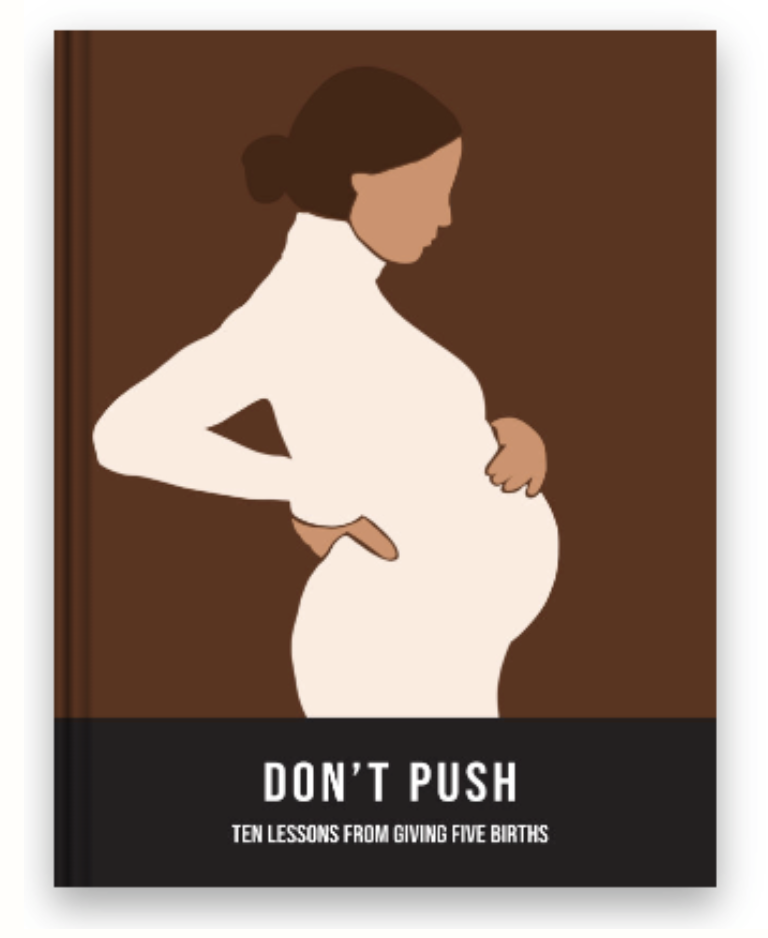
Don’t Push is a short, practical guide based on five births, with ten lessons to help you prepare for birth, work through fear and pain, get the support you need, and know what to do when it matters.
Learn how to:
prepare yourself before labor
work through fear
work with pain rather than resist it
know how your partner can really help
use simple practical techniques during labor
trust your body
prepare for the moments after birth
rest and recover